

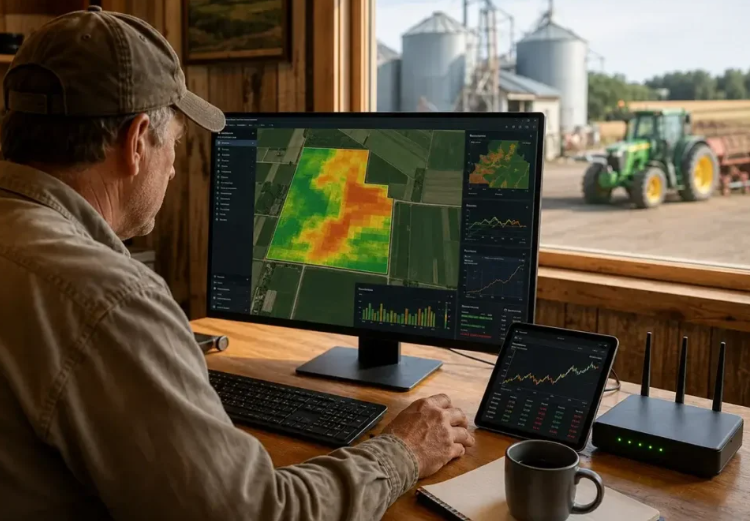
Modern farms run irrigation controllers, weather stations, livestock trackers and security cameras — all of which need connectivity that cellular dead zones do not provide. Starlink changed this by bringing broadband to the field, but the dish alone does not cover a 200 ha property. The working pattern is: one dish for backhaul, then outdoor wireless to reach the corners.
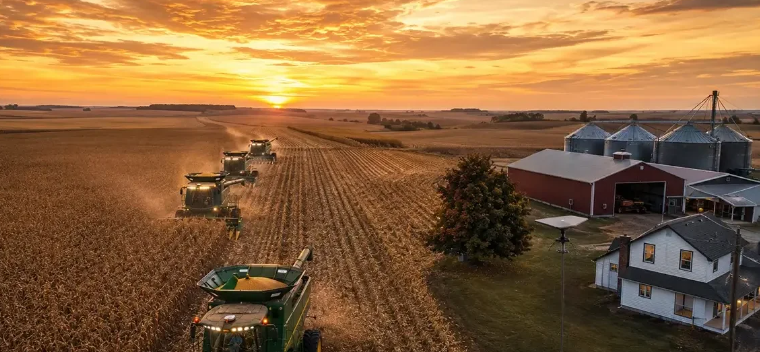
1. Backhaul first
Mount a Starlink dish (Mini or Standard) at the farmhouse or a central silo with the clearest sky. Power it from mains with the 144W 48V adapter (PL72-V3V4) or, for outbuildings, from a 24 V solar bank via a step-down.
2. Distribute with outdoor WiFi6 APs
Outdoor WiFi6 Mesh APs (IP67, ~24 dBm, PoE) placed on barn roofs and poles push Wi-Fi across yards and along fence lines. Because they are PoE, each AP needs only one CAT5e cable run back to a PoE switch — no separate power trench.
3. PoE endpoints
| Device | Powered by |
|---|---|
| Security / livestock cameras | PoE switch (802.3af/at) |
| Soil / weather sensors | PoE or low-power radio |
| Gate / pump controllers | PoE relay |
4. Why this works
Starlink removes the "no internet" problem; outdoor PoE wireless removes the "no cable to the far field" problem. Together they turn a remote property into a managed IoT site without running fibre.
For very distant outbuildings beyond Wi-Fi range, add a 25 km 5.8 G bridge as the last hop — the same pattern used at the mountain eco-lodge.